
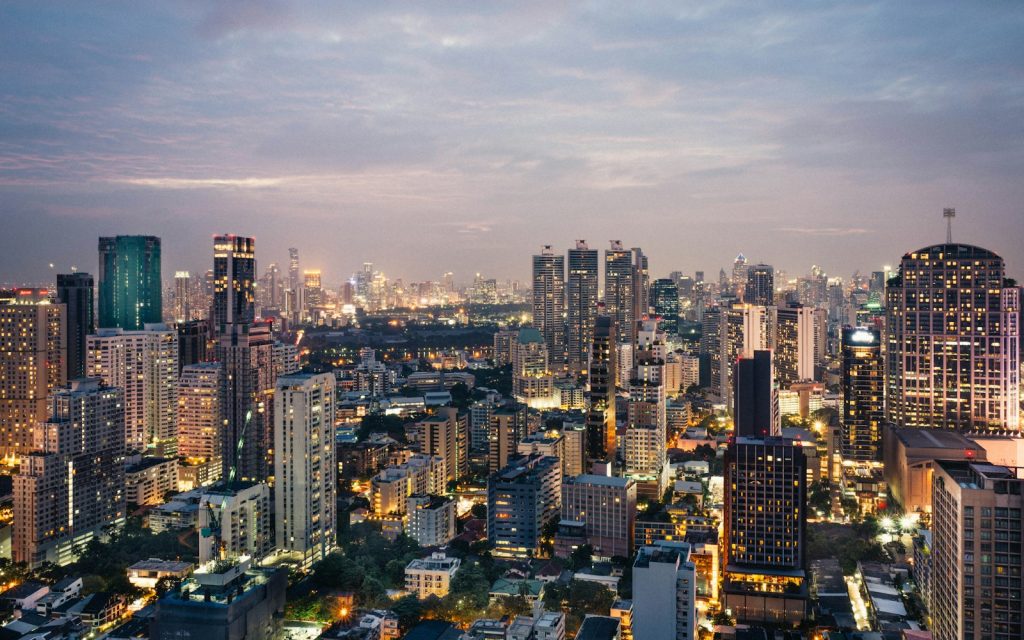
The global economy is slowing but still standing — for now. In its latest World Economic Outlook, released as the IMF and World Bank Annual Meetings convened in Bangkok, the International Monetary Fund projected world growth of 3.1% in 2026, down from 3.5% in 2025, with a modest pickup to 3.4% in 2027. But the Fund warned that resilience is being tested by the energy shock from the Gulf conflict, rising inflation and the risk of an AI investment unwind.
Key forecasts
- World growth: 3.1% in 2026; 3.4% in 2027
- Global inflation: rising from 4.1% in 2025 to 4.7% in 2026
- ASEAN-5: 4.4% growth in 2026 · GCC economies: contracting 4.8%
An uneven picture
The numbers mask big differences. Economies at the heart of the AI hardware supply chain are booming: the IMF projects 10.7% growth for Taiwan and 8.4% for Vietnam. By contrast, Gulf Cooperation Council economies are forecast to contract by 4.8% as conflict disrupts oil exports and shipping through the Strait of Hormuz. Thailand, the host, is expected to grow 2.1% in both 2026 and 2027.
Inflation is back
Global headline inflation is now projected at 4.7% this year. Food is a growing concern: rice import prices are up around 50% and wheat import prices around 37% since the Middle East war began. Central banks are responding — the US Federal Reserve raised rates in September, and US 10-year Treasury yields have climbed to their highest level since 2002.
The IMF’s message from Bangkok: the world economy has absorbed shock after shock, but its buffers are thinning.
The risks
- Prolonged conflict and attacks on energy infrastructure.
- An AI correction: a sharp unwind in AI investment could reduce global GDP by up to 0.4% relative to the baseline by 2028.
- Climate: a possible “super El Niño” could add to food-price pressure.
- Cyber threats to financial and critical systems.
Record turnout in Bangkok
The October 12–18 meetings at the Queen Sirikit National Convention Center drew almost 20,000 participants from 191 countries, the highest attendance in the event’s history and Thailand’s first time as host since 1991. Outcomes included the “Bangkok Blueprint” against cross-border digital financial fraud.
More economic analysis in our Business section.