
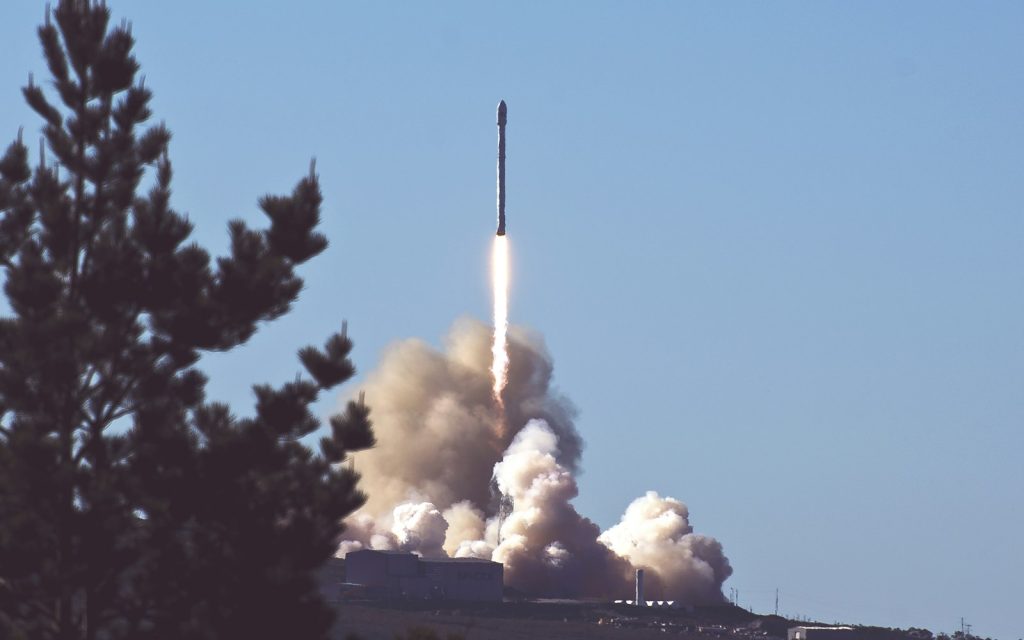
Four astronauts are on their way to the International Space Station after NASA’s SpaceX Crew-13 mission lifted off on Thursday, October 1, at 11:10 a.m. EDT from Space Launch Complex 40 at Cape Canaveral Space Force Station in Florida. A Falcon 9 rocket carried the Dragon spacecraft into orbit for a flight of roughly seven hours and 50 minutes.
Meet the crew
- Jessica Watkins — NASA
- Luke Delaney — NASA
- Joshua Kutryk — Canadian Space Agency
- Sergey Teteryatnikov — Roscosmos
A record-fast rendezvous
Dragon is scheduled to dock autonomously with the forward port of the station’s Harmony module at around 7 p.m. EDT. NASA says that will be the fastest launch-to-docking by a US spacecraft in the history of the space station — a sign of how routine and refined commercial crew operations have become.
Handover in orbit
Crew-13 will join Expedition 75 crew members Anil Menon, Pyotr Dubrov and Anna Kikina. After a handover period, the Crew-12 astronauts — Jessica Meir, Jack Hathaway, the European Space Agency’s Sophie Adenot and Andrey Fedyaev — will return to Earth. The new crew is expected to spend about six months aboard the orbiting laboratory.
The science on board
- Lab-grown tissues: Using microgravity to produce human stem cell-derived tissues for personalised medicine and disease modelling, including heart disease and Parkinson’s.
- Space farming: Testing a largely autonomous plant-growth system for crop production and studying how plants grow outside dedicated facilities.
- Astronaut health: Continuing studies on blood-flow abnormalities in microgravity and trialling a new in-flight diagnostic device.
Every long-duration mission is a rehearsal for deeper exploration — the medical and agricultural research on this flight feeds directly into plans for the Moon and Mars.
Why it matters
Crew-13 is part of NASA’s Low Earth Orbit Program, which relies on private companies to provide transport to and from orbit. The inclusion of a Roscosmos cosmonaut on an American spacecraft also shows that, despite deep political tensions on the ground, cooperation in orbit continues. One crew member will miss the birth of his third child during the six-month mission — a reminder of the personal sacrifices behind each flight.
Explore more space and science stories in our Technology & AI section.